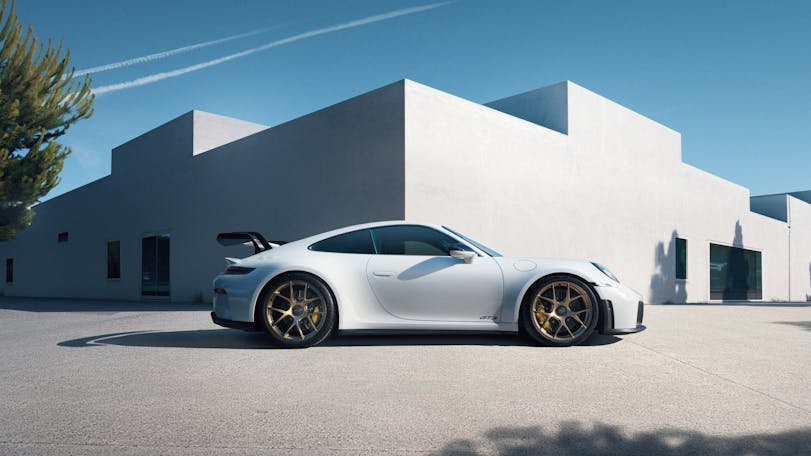
How Ferdinand Porsche invented – and Porsche reinvented – the hybrid car
Learn how hybrid technology has been part of the Porsche story for decades
Copy link
Share on Facebook
Share on X
Share on LinkedIn
From the Semper Vivus and 918 Spyder to today’s 911 T-Hybrid models, discover how Porsche turned electrification into a performance technology
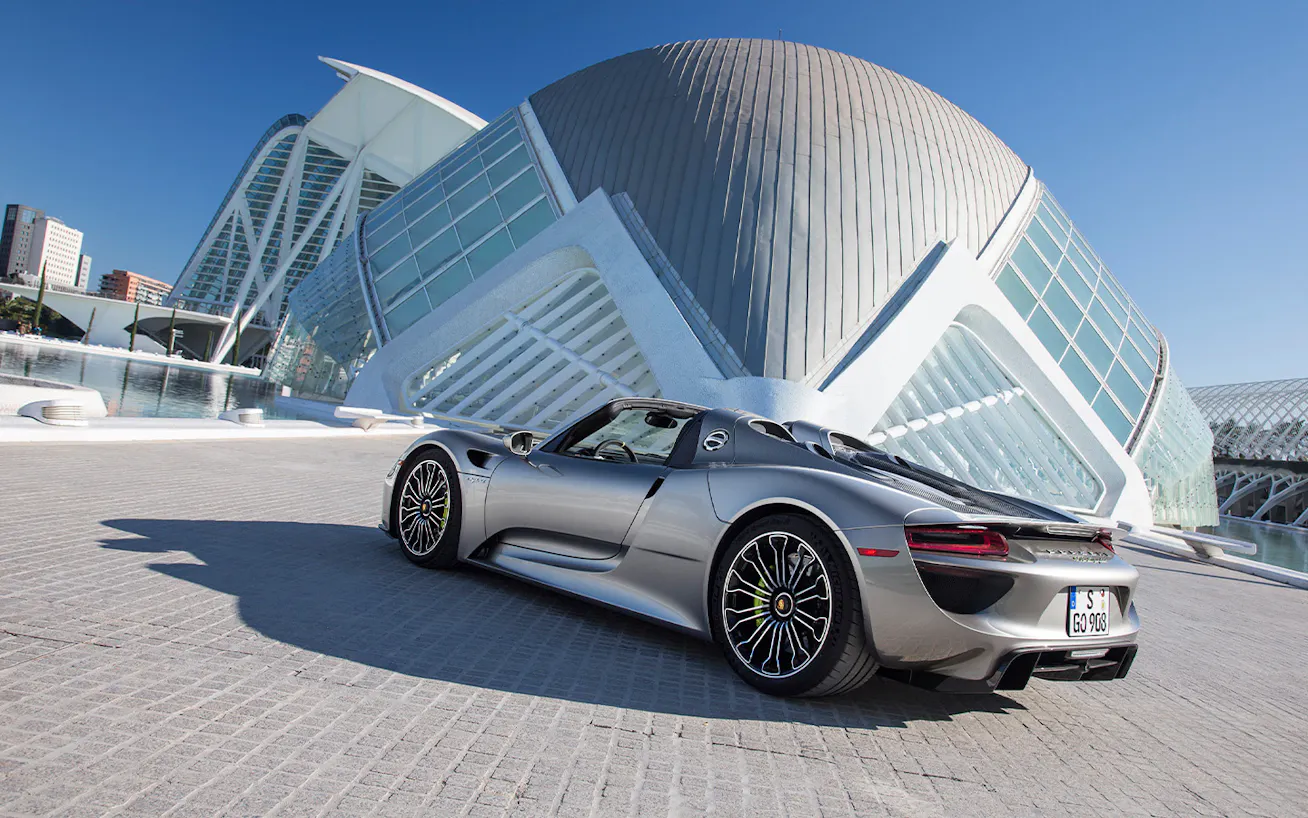
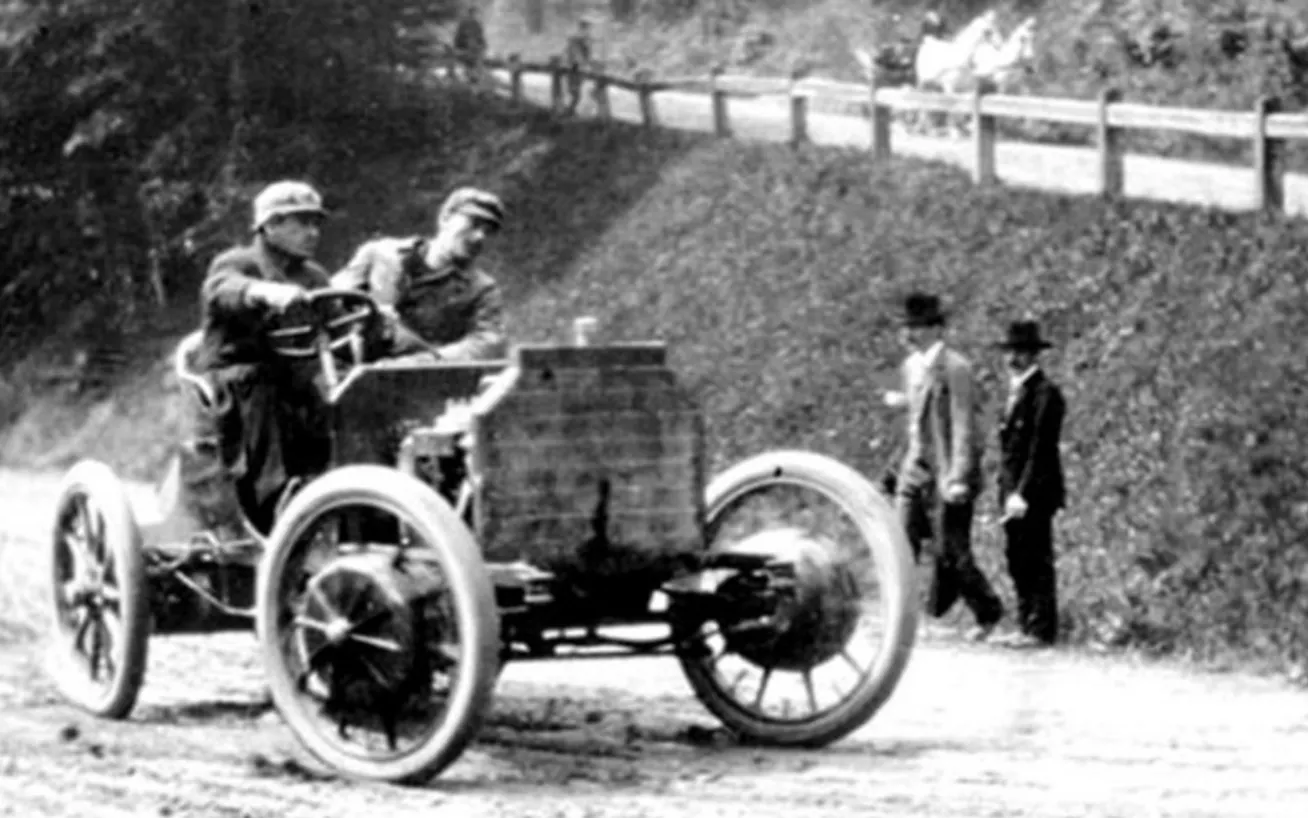
Fast facts: Porsche hybrid history• When did Porsche reveal the 918 Spyder, and why was it significant? Hybrid-powered supercars were far from commonplace when Porsche unveiled the 918 Spyder concept in 2010 – or when the production model followed in 2013. It helped prove that a plug-in hybrid was a way to make a genuine hypercar faster and more capable and challenging the assumptions of many about what a hybrid car could do.• What are the key performance attributes of the Porsche 918 Spyder? The 918 Spyder combined a 4.6-litre V8 with two electric motors (front and rear). With 887 PS, it could reach 0-100 km/h (0-62 mph) in 2.6 seconds and hit a top speed of 345 km/h (214 mph), with an electric-only range of around 30 km (18 miles).• Was the first-ever hybrid car designed by Porsche? The 1900 ‘Semper Vivus’ was designed by Porsche founder Ferdinand Porsche and is considered the first-ever functional hybrid car. It used front-wheel hub electric motors, with its petrol engine acting as a generator.• What are the famous hybrid Porsche race cars? The 919 Hybrid won the 24 Hours of Le Mans three years running (from 2015-2017), while a 919 Hybrid Evo, driven by Timo Bernhard, set the fastest-ever Nürburgring Nordschleife lap in 2018. It’s a record that still stands to this day.• How the 918 Spyder influenced later Porsche hybrid models The 918 Spyder helped inform the development of plug-in hybrid Cayenne and Panamera E-Hybrid models.• What was the first 911 to feature hybrid technology? In 2024 Porsche revealed the 911 Carrera GTS featuring T-Hybrid technology. It extended electrification to the most iconic of all Porsche sportscars and provided a powerful boost of energy, among other benefits.Hybrid-powered supercars are commonplace now – but they weren’t when Porsche revealed the 918 Spyder in 2013. At the time, its plug-in hybrid powertrain was viewed by some as a novelty, by others as a compromise driven purely by environmental concerns. But it was neither. Rather, this was a familiar story of Porsche seizing on the opportunities that new technology could offer and using it to create something exceptional.When it was unveiled in 2013, the hybrid-engined 918 Spyder proved its credentials as a true hypercar Photo: Porsche918 Spyder: hybrid power and mind-blowing performanceIn the early 2010s, hybrid technology was more associated with fuel-efficient hatchbacks than high-performance hypercars. And to many enthusiasts, the idea of an electrified sports car seemed counterintuitive to maximising performance and driver engagement. Porsche engineers, however, saw that hybrid power could be harnessed to do exactly that.Thanks to its combination of a 4.6-litre V8 engine and two electric motors (one at the front and one at the rear), the 918 Spyder produced a staggering 887 PS – enough for a top speed of 345 km/h (214 mph) and a 0-100 km/h (0-62 mph) time of just 2.6 seconds. The 918 Spyder broke lap records for a production car at the Nürburgring in 2013 and at the Bugatti circuit in Le Mans in 2014. It was a true hypercar in both looks and performance, yet it also featured an electric-only range of approximately 30 km (18 miles) and an official CO₂ emissions rating of 72 g/km (70 g/km with Weissach package). The 918 Spyder showed that electrification wasn’t solely the preserve of ‘green’ saloon cars and instead could be used to make high-performance cars both quicker and more energy efficient. It was a daring statement of intent, but perhaps more importantly it offered a glimpse of how exciting an electrified future could be.Designed by Porsche founder, Ferdinand Porsche, and revealed to the public in 1901, the Lohner-Porsche Mixte is considered the first-ever production-ready hybrid car Photo: PorscheThe ‘Semper Vivus’ and Lohner-Porsche Mixte: the first-ever hybrid carsParadoxically, this forward-looking hypercar had roots that stretched back more than a century. All the way to 1900, in fact, with the world's first functional hybrid car, the ‘Semper Vivus’. Designed by Porsche founder Ferdinand Porsche, a year later it evolved into the first-ever hybrid production car, the Lohner-Porsche Mixte. Powered by wheel-hub electric motors on the front wheels, with a petrol engine that functioned as a generator, it was an innovative solution to the limited battery range offered by the previous pure-electric version.Not content with designing and engineering the Mixte, Ferdinand Porsche also raced it, winning the large car category in the Exelberg hillclimb in Austria in 1902.Cayenne S Hybrid: the first production-series PorscheIt would be more than a century until Porsche was once again associated with hybrid technology. First came the Cayenne S Hybrid in 2010, followed shortly afterwards by the Panamera S Hybrid. Both combined a 3.0-litre supercharged V6 petrol engine with an electric motor, and offered electric-only drive for short distances.Launched in 2010, the Cayenne S Hybrid (E II) was the first-ever series-produced Porsche hybrid car Photo: PorscheAt the same time as developing production hybrid cars that balanced strong performance with reduced CO₂ emissions, Porsche was doing what it always does: proving new technology on the track with cars such as the experimental 911 GT3 R Hybrid, which paired a flat-six engine with two electric motors and an innovative flywheel energy-recovery system.919 Hybrid: three Le Mans wins and a Nürburgring recordThen there was the 919 Hybrid, which secured three consecutive victories at the 24 Hours of Le Mans between 2015 and 2017. In 2018, a heavily modified version called the 919 Hybrid Evo set the fastest lap time ever recorded at the Nürburgring Nordschleife, with Timo Bernhard at the wheel. The time of 5 minutes 19.55 seconds is a record that still stands to this day.911 Carrera GTS: benefitting from Porsche T-Hybrid technologyUltimately, the plug-in hybrid powertrain of the 918 Spyder was instrumental in the development of a generation of electrified Porsche models that followed it. The lessons learned from it gave Porsche the impetus and knowledge to move confidently into the electrified era. New E-Hybrid versions of the Cayenne and Panamera were introduced, with plug-in hybrid powertrains that gave the models an even broader range of abilities.In 2024, Porsche revealed the Porsche 911 Carrera GTS, which saw the introduction of T-Hybrid technology, which uses electrification to enhance the performance of its most iconic model by delivering near-instant boost pressure to the engine. This, in turn, helps build torque very quickly, achieving the kind of near-linear power delivery that is perfect for a sportscar like the 911. T-Hybrid is currently available (as of September 2026) in all 911 GTS model as well as the 911 Turbo S and 911 Turbo S Cabriolet.In 2024, hybrid technology arrived in the 911 for the first time with the reveal of the 911 Carrera GTS models. Its Porsche T-Hybrid technology provides a significant boost in performance and responsiveness Photo: PorscheDeveloping a hybrid hypercar may have seemed, to some, like a detour when the Porsche 918 Spyder made its debut. The reality was that it was just another case of Porsche arriving at the future before everyone else.• Find out more about the 918 Spyder• How Ferdinand Porsche designed the first-ever hybrid car• Watch a film of the 919 Hybrid Evo on its record-breaking lap of the Nürburgring• What is T-Hybrid technology from Porsche?
Discover the power of T-Hybrid technology
Configure your 911 Turbo S
Continue reading
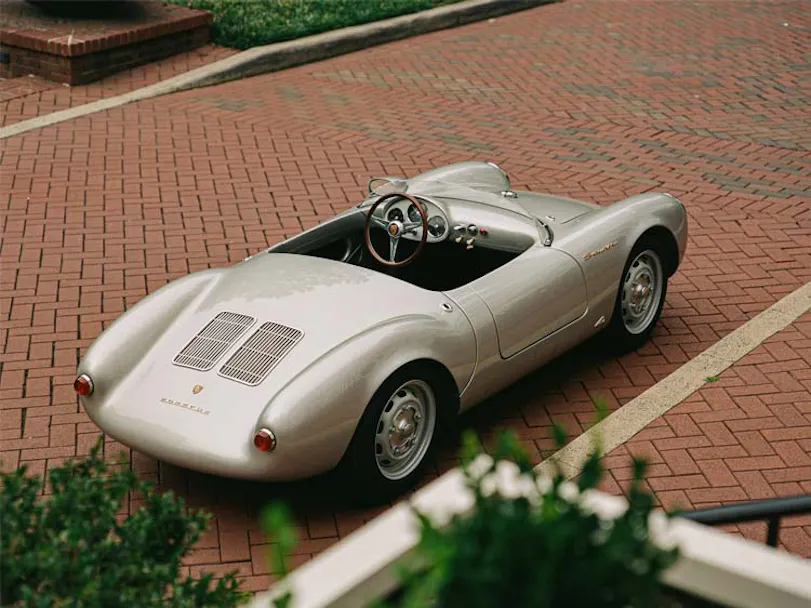
How Hedley Studios reinterpreted the Porsche 550 at 80% scale and 100% electric
Hedley Studios spent years studying the Porsche 550 to understand what made it special. Founder Ben Hedley explains how the team recreated its design, engineering and driving character at 80 per cent scale
Read more
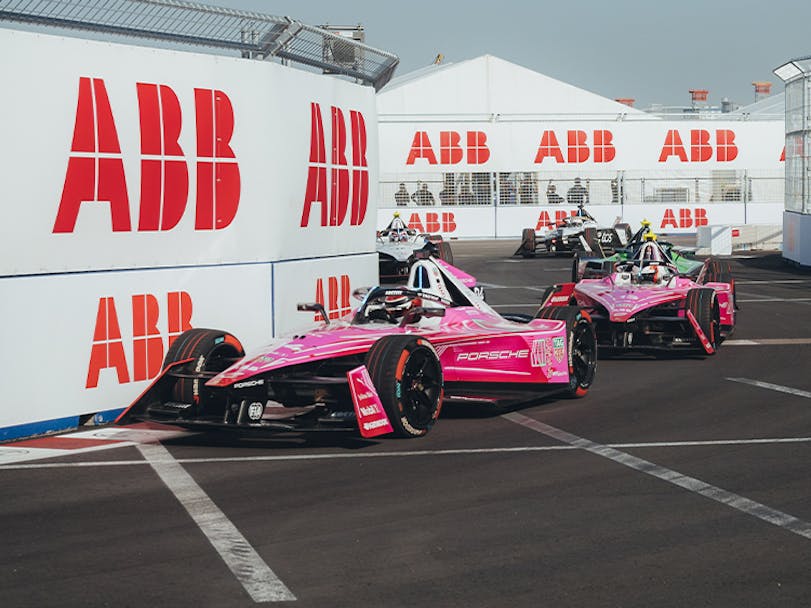
What is Formula E and how fast are the cars?
Formula E is one of motorsport’s most entertaining series. With Porsche entering works and customer teams in the all-electric championship, find out all about its hi-tech race cars
Read more
7 things you need to know about the new 911 GT3 models
Over a quarter of the century, the 911 GT3 has achieved legendary status. With its combination of motorsport-tested design and maximum performance, it bridges the boundary between racetrack and road. Get to know the newest 911 GT3 editions
Read more